ControlNet (Conditioning Scale)
ControlNet is a neural network adapter that directs an image generation model to follow structural geometry from an auxiliary input, such as edge outlines, depth maps, or pose skeletons. The conditioning scale determines how strictly the generated image must adhere to that structural frame. It bridges the gap between chaotic diffusion prompts and predictable commercial layout design.
Also known as: ControlNet, conditioning scale, controlnet strength, canny, depth, pose
Side-by-side test results
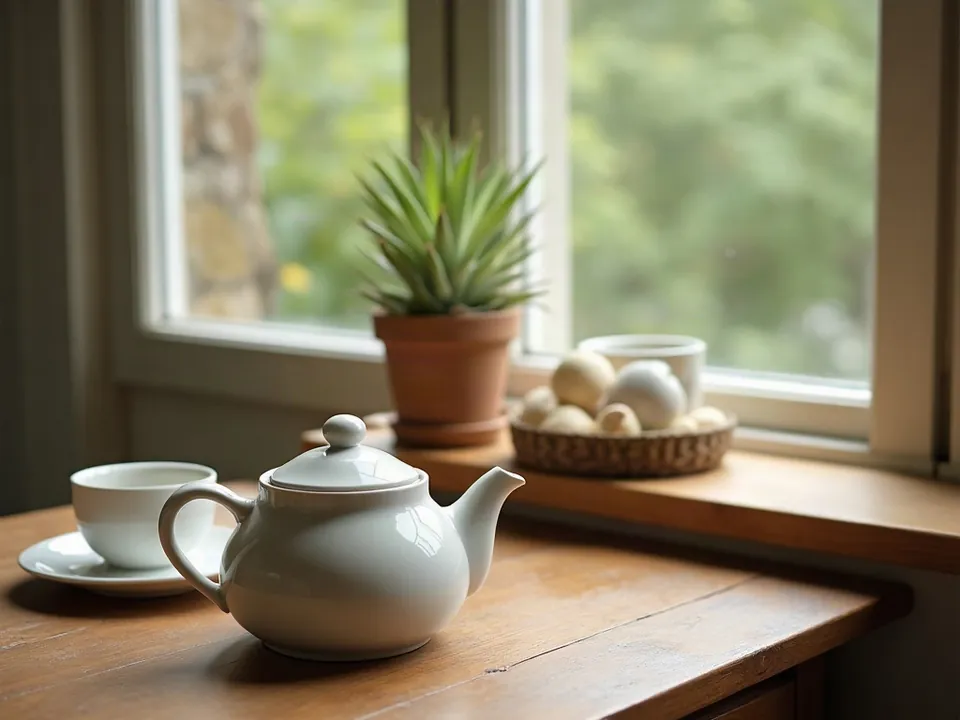
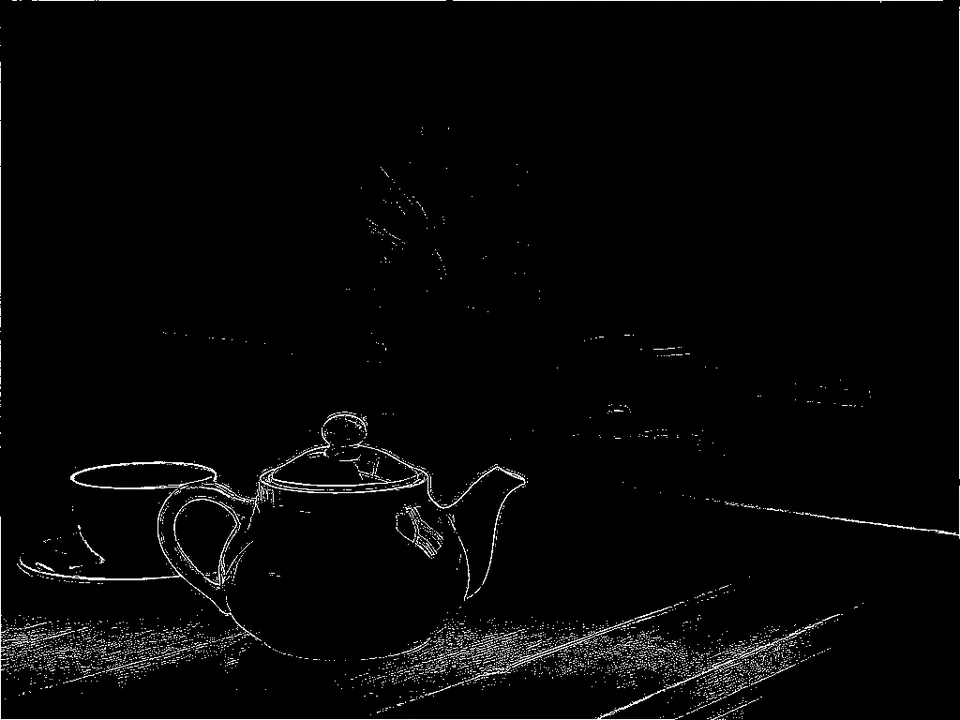
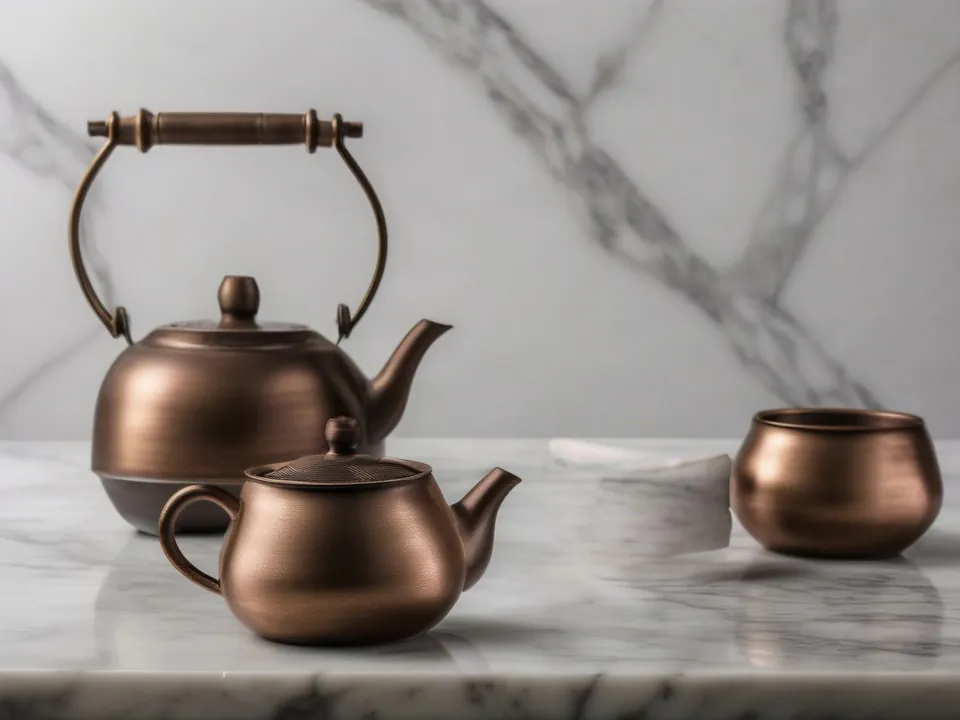
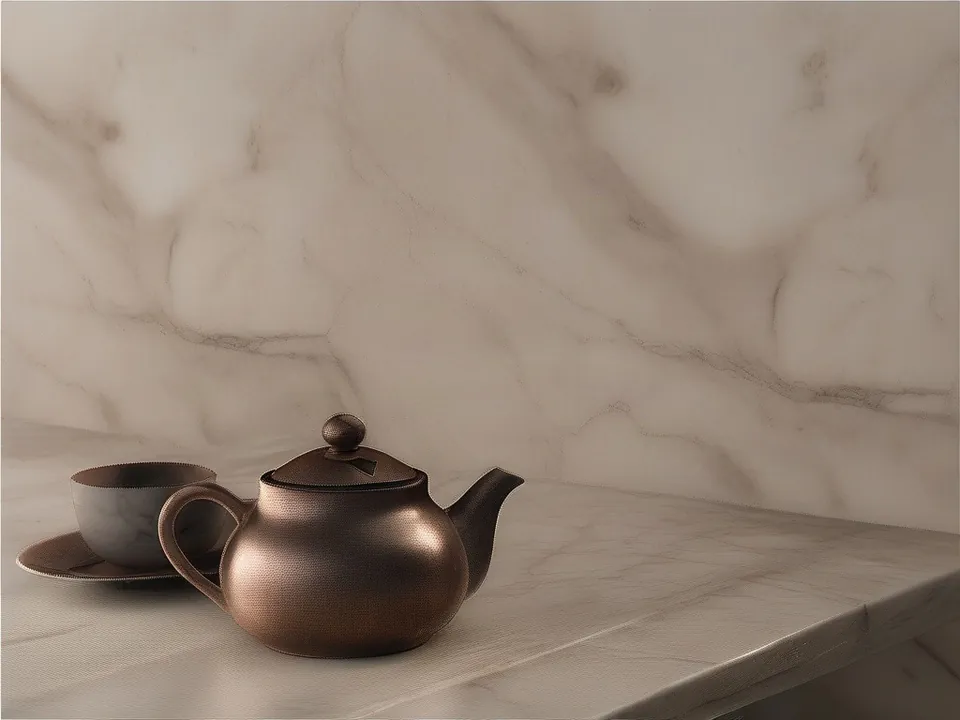
Model: Stable Diffusion XL 1.0 (przez API fal.ai, 30 kroków, CFG 7,5) + ControlNet canny SDXL. Settings: contours extracted from the step-count entry test image, seed 1411, varying only conditioning_scale. Date: 14.11.2026.
Prompt: a bronze metal teapot and two cups on a marble table, studio photo
At a strength of 0.3, the model treated the contours loosely: it drew a second kettle with a handle, added an unprompted bowl, and rearranged the table setting. At 0.9, the kettle and cup sat precisely where the outlines placed them, locking in the angle and dimensions while the prompt supplied the bronze and marble finishes. Because I built the contour map with a basic edge filter, it also picked up grain noise from the wooden tabletop: at high control strengths, that visual noise will bleed straight into the finished picture.
Syntax across generators
| Generator | Parameter | Values | Default |
|---|---|---|---|
| Stability AI (SD 3.5) | Control: Structure / Sketch - control_strengthValue from Structure endpoint | 0-1 | 0.7 |
| ComfyUI | ControlNetApplyAdvanced: strength, start_percent, end_percentRanges from nodes.py code (docs.comfy.org does not provide them) | strength 0.0-10.0 (step 0.01); start/end 0.0-1.0 (step 0.001) | strength 1.0; start 0.0; end 1.0 |
| Midjourney | none | - | - |
| FLUX | no ControlNet in API; composition via bounding boxes (FLUX 3) | boxes [top, left, bottom, right] on 0-1000 grid | - |
| Ideogram | none (bbox in 4.0/4.5 JSON prompts) | - | - |
| GPT Image | none | - | - |
- Sources, verified on 14.11.2026:
- Stability AI: docs.stability.ai/api-reference/control/structure.md
- ComfyUI: raw.githubusercontent.com/comfyanonymous/ComfyUI/master/nod...
- Midjourney: docs.midjourney.com/hc/en-us/articles/32859204029709-Parame...
- FLUX: docs.bfl.ml/flux_3/flux3_image_overview.md
- Ideogram: docs.ideogram.ai/prompting/text-in-images
- GPT Image: developers.openai.com/api/docs/guides/image-generation
When to use it
- Locking down interior room geometry or architectural perspectives while testing different materials and lighting schemes for a client presentation.
- Preserving specific character poses via OpenPose for graphic novels, storyboard sequences, or commercial fashion lookbooks.
- Converting rough paper sketches or vector line art directly into photorealistic product renders without shifting the layout.
Common mistake
Setting the strength to 1.0 or higher on a noisy edge map will force the model to render dust, grain, and compression artifacts as hard physical objects in your scene. Another frequent mistake is mismatching the ControlNet adapter with the base diffusion model: loading an SD 1.5 ControlNet model into an SDXL workflow fails completely or produces blank noise.
Ready-to-use example
ComfyUI:  Apply ControlNet -> strength = 0.8, start_percent = 0.0, end_percent = 1.0
Stability (Control):  /control/structure with "control_strength": 0.7
Frequently asked questions
What does the Canny ControlNet module do?
It extracts high-contrast edge outlines from a reference image and forces the AI model to draw its new subject inside those exact lines.
How is ControlNet different from standard image-to-image?
Standard image-to-image blends color and pixel noise, which often shifts anatomy and perspective. ControlNet isolates structural data like 3D depth or joint positions, letting you change styles, textures, and lighting completely without moving a single object.
Can I combine multiple ControlNet models in one generation?
Yes. Advanced interfaces let you chain processors, allowing you to control a character pose with OpenPose while simultaneously locking room perspective with a Depth map.
Why does my generation look fried or unnatural at maximum strength?
When the conditioning scale is pushed too far above 1.0, the model prioritizes geometric adherence over visual plausibility, resulting in harsh outlines, oversaturated colors, and structural distortion.