
Sampler and Scheduler
The sampler is the numerical algorithm that strips random noise away step by step to reveal an image, while the scheduler calculates how much noise to remove at each interval. You configure both directly in advanced local tools like Stable Diffusion and ComfyUI, whereas commercial cloud apps manage them quietly behind the scenes. Choosing the right pair determines your generation speed, rendering detail, and how reliably you can reproduce a scene.
Also known as: sampler, sampler_name, scheduler, Euler, DPM++ 2M Karras
Side-by-side test results
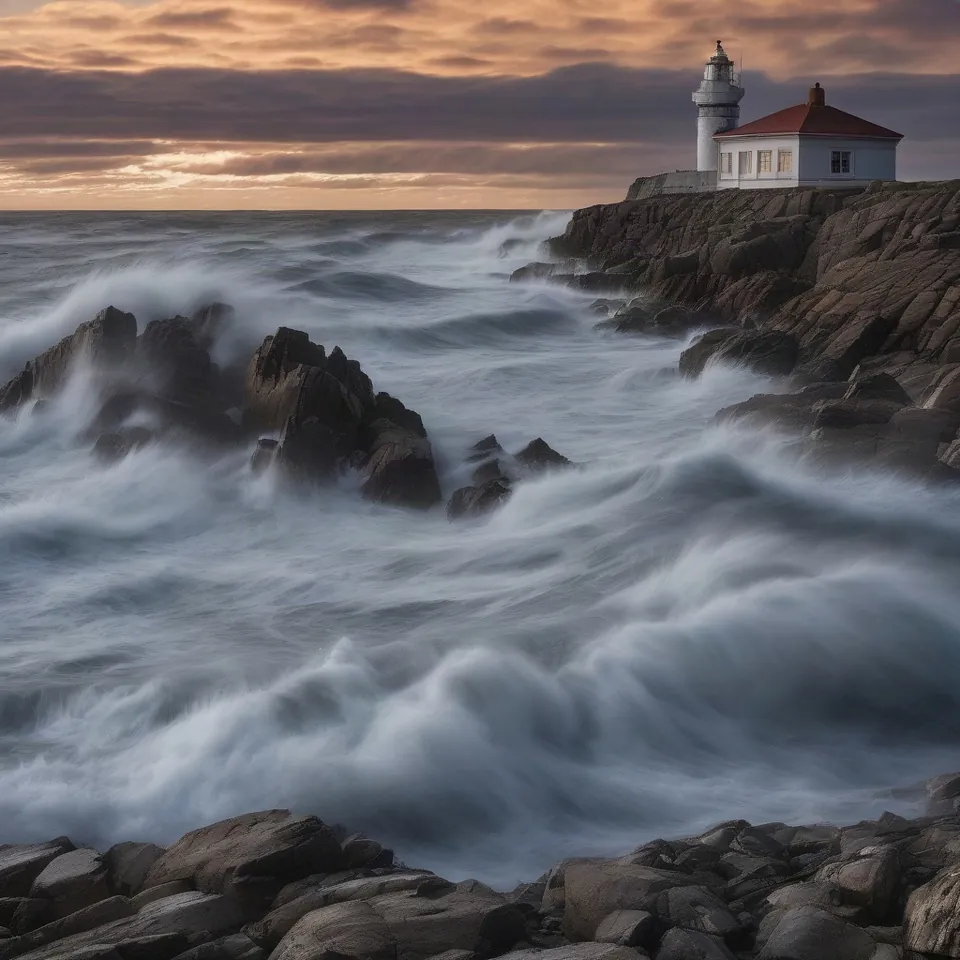

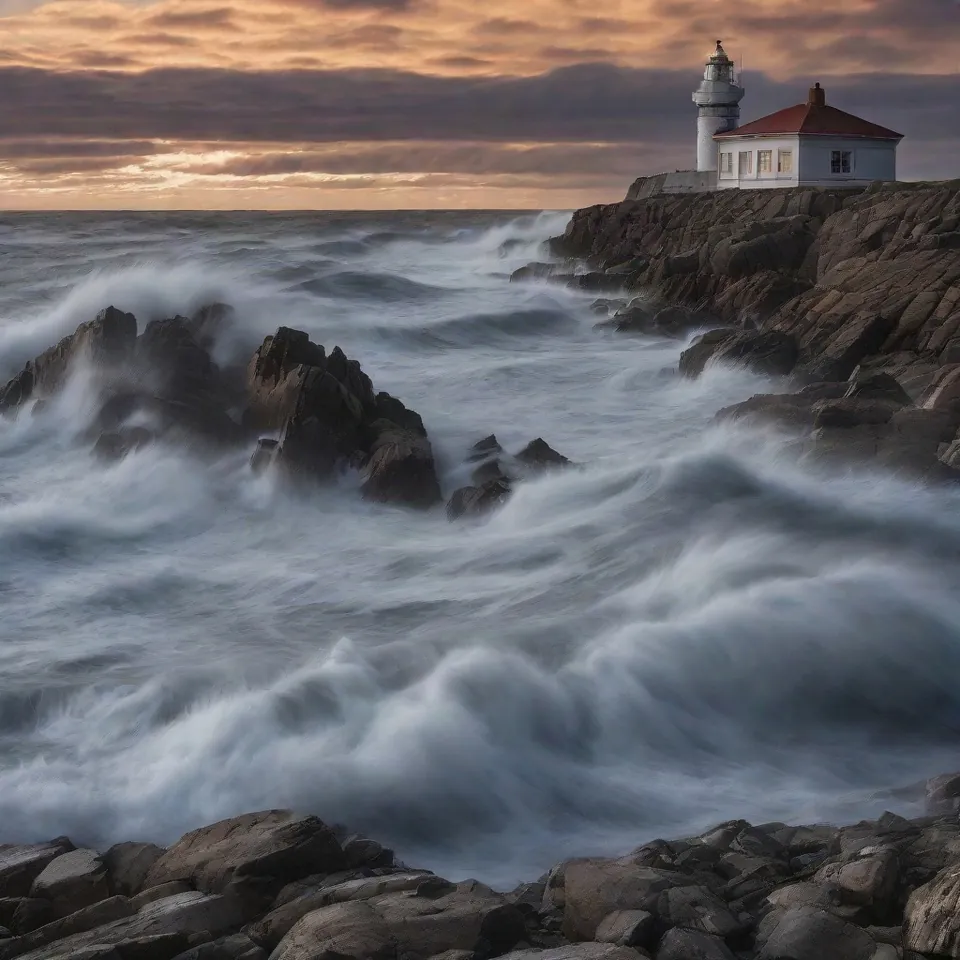

Model: Stable Diffusion XL 1.0 (przez API fal.ai, 30 kroków, CFG 7,5). Settings: seed 1411, 30 steps, CFG 7.5, only the sampler changes. Date: 14.11.2026.
Prompt: a lighthouse on a rocky coast at dusk, waves crashing, dramatic sky, wide shot, photo
In my side by side test, Euler, DPM++ 2M Karras, and DDIM delivered nearly the exact same composition, with small variations visible only in the texture of the water and the craggy rocks. Euler a (ancestral) went in a totally different direction and placed a lighthouse on an isolated islet. Ancestral algorithms add fresh noise back into the canvas at every cycle, which means they can wander far off course even when locked to the exact same seed.
Syntax across generators
| Generator | Parameter | Values | Default |
|---|---|---|---|
| Seedream | unconfirmed | - | - |
| ComfyUI | sampler_name / scheduler (KSampler)Lists from source code (docs.comfy.org does not list them) | sampler_name: euler, euler_cfg_pp, euler_ancestral, euler_ancestral_cfg_pp, heun, heunpp2, exp_heun_2_x0, exp_heun_2_x0_sde, dpm_2, dpm_2_ancestral, lms, dpm_fast, dpm_adaptive, dpmpp_2s_ancestral, dpmpp_2s_ancestral_cfg_pp, dpmpp_sde, dpmpp_sde_gpu, dpmpp_2m, dpmpp_2m_cfg_pp, dpmpp_2m_sde, dpmpp_2m_sde_gpu, dpmpp_2m_sde_heun, dpmpp_2m_sde_heun_gpu, dpmpp_3m_sde, dpmpp_3m_sde_gpu, ddpm, lcm, ipndm, ipndm_v, deis, cfgpp_ud10_ab, res_multistep, res_multistep_cfg_pp, res_multistep_ancestral, res_multistep_ancestral_cfg_pp, gradient_estimation, gradient_estimation_cfg_pp, er_sde, seeds_2, seeds_3, sa_solver, sa_solver_pece, ddim, uni_pc, uni_pc_bh2. scheduler: simple, sgm_uniform, karras, exponential, ddim_uniform, beta, normal, linear_quadratic, kl_optimal | not specified in documentation |
| Midjourney | no such parameter | - | - |
| FLUX | none in API | - | - |
| Ideogram | no such parameter | - | - |
| GPT Image | no such parameter | - | - |
| Imagen (retired) | none in retrieved documentation | - | - |
| Qwen-Image | none in retrieved documentation | - | - |
| Stability AI (SD 3.5) | none in API | - | - |
- Sources, verified on 14.11.2026:
- Seedream: docs.byteplus.com/en/docs/ModelArk/1541523
- ComfyUI: raw.githubusercontent.com/comfyanonymous/ComfyUI/master/com...
- Midjourney: docs.midjourney.com/hc/en-us/articles/32859204029709-Parame...
- FLUX: docs.bfl.ml/api-reference/utility/generate-an-image-with-fl...
- Ideogram: developer.ideogram.ai/openapi/ideogram-api-v2.json
- GPT Image: developers.openai.com/api/docs/guides/image-generation
- Imagen: docs.cloud.google.com/vertex-ai/generative-ai/docs/image/ge...
- Qwen-Image: www.alibabacloud.com/help/en/model-studio/qwen-image-genera...
- Stability AI: docs.stability.ai/api-reference/generate/stable-diffusion-3...
When to use it
- Stick with the default algorithm if the generated style and composition already look right to you
- Switch to an ancestral option like Euler a when you want fresh creative variations while locking the seed
- Choose non-ancestral standards like Euler or DPM++ 2M when you need consistent, predictable results for prompt experiments
Common mistake
A frequent mistake is testing multiple samplers without locking the seed value. If you leave the seed on random, you are simply looking at different noise rolls rather than the algorithmic character of the sampler itself. Creators also spend hours hunting for a single magic sampler to fix bad results. In reality, the difference between modern mainstream samplers is tiny compared to the impact of your prompt, resolution, and guidance scale.
Ready-to-use example
ComfyUI:  KSampler -> sampler_name = dpmpp_2m, scheduler = karras
AUTOMATIC1111 / Forge:  Sampling method: DPM++ 2M, Schedule type: Karras
Midjourney, GPT Image, Ideogram, FLUX:  no parameter available
Frequently asked questions
Which sampler is the best overall?
There is no universal best pick. For dependable consistency and sharp detail, DPM++ 2M with the Karras schedule or standard Euler work well across most styles, while ancestral samplers offer more artistic variety.
What is the practical difference between a sampler and a scheduler?
Think of the sampler as the artist deciding how to scrub away the rough pencil marks, while the scheduler is the stopwatch dictating how much time and effort to spend on each step from start to finish.
Why does an ancestral sampler change my picture when I change step counts?
Ancestral samplers inject fresh random noise into the canvas at every iteration. Changing the total step count alters the entire noise sequence, which completely rebuilds the layout instead of just sharpening the existing details.