TIME Person of the Year 2026: Who picks it, and what does the cover mean?
TIME plans to announce its 2026 Person of the Year on December 10. Here’s how the editors decide and how to tell a reader poll from their final choice.
Contents 6
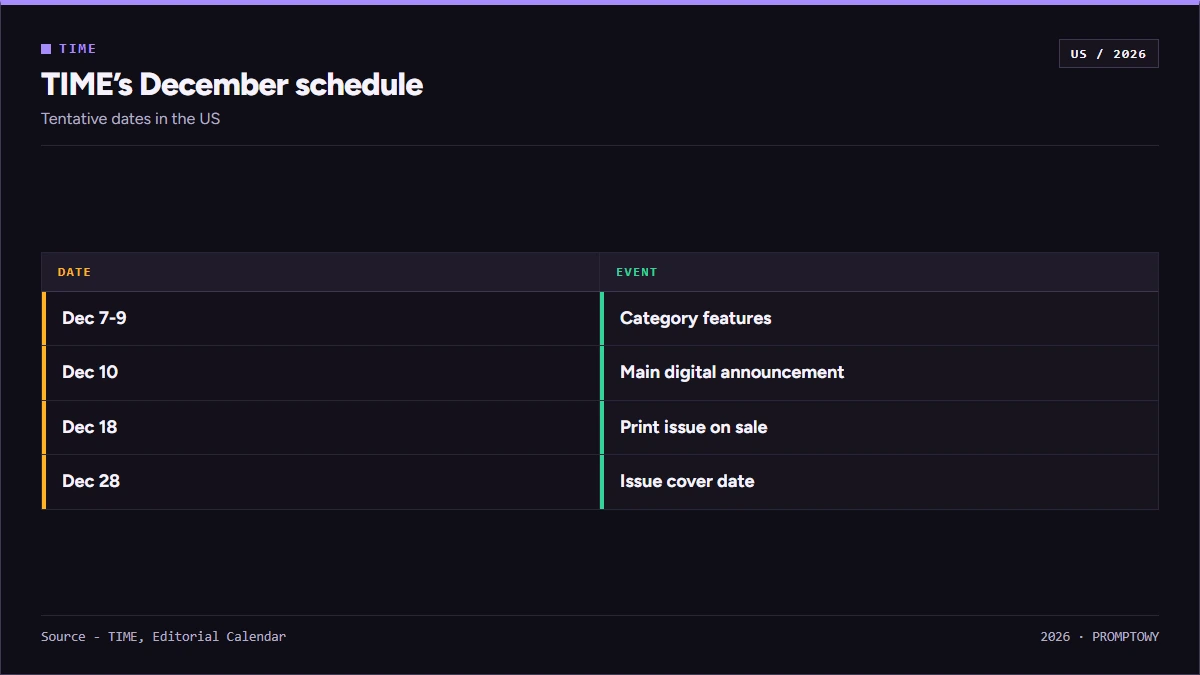
TIME’s editors choose the 2026 Person of the Year. They look for the person, group, or subject that did the most to shape the year’s news and people’s lives, with room for both positive and negative consequences. TIME’s editorial calendar puts the main digital announcement on December 10, 2026, after its category announcements scheduled for December 7-9. Those dates are provisional. As of November 26, I found no official 2026 pick or shortlist in TIME’s reporting. Odds on a prediction market show what people are trading on. The decision comes from the magazine.
- TIME plans to unveil its 2026 Person of the Year on December 10.
- TIME editors choose the winner based on influence over the year's news, separate from reader polls.
What can the odds tell you before TIME announces its pick?
A market quote reflects how traders are pricing a particular outcome at that moment under the market’s rules. That makes the odds a snapshot of expectations. TIME’s editors are making a separate judgment about the year and will explain it in their own publication. A name at the top of a market can attract plenty of attention while the magazine’s choice remains unconfirmed.
Example. Say you see a screenshot in a group chat showing a candidate leading a U.S. prediction market. I’d look for a TIME article that identifies the 2026 selection and gives the editors’ reasons. If all you can trace the screenshot back to is a trading page, the accurate description is that the candidate was leading that market when the screenshot was taken.
What does the cover say about the person on it?
The cover introduces TIME’s account of what shaped the year. The series began with Charles Lindbergh in 1927, but the editors can tell the story through a collective or even a technology. In 2011, for example, TIME chose The Protester, a figure representing people who took part in protests. The title gave the magazine a way to tell a story about collective action across individual lives.
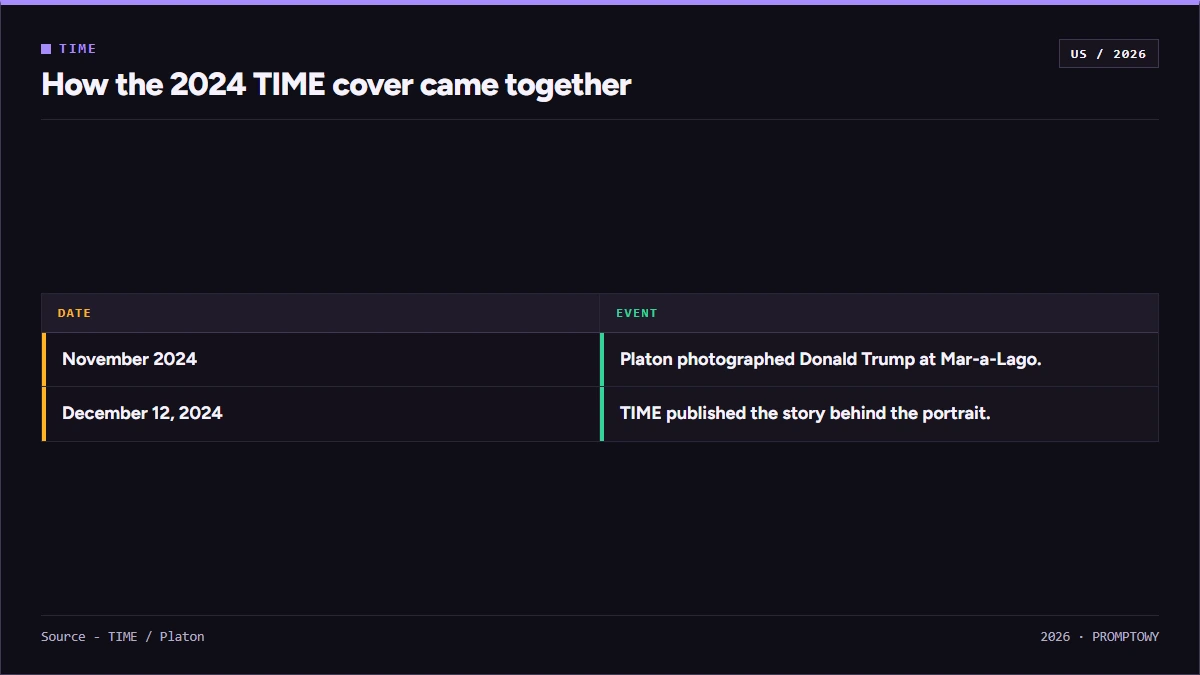
In 2024, TIME chose Donald Trump. The magazine’s account of making the cover says photographer Platon took the portrait at Mar-a-Lago in November, when Trump was president-elect. TIME published the cover account on December 12. In that case, there were separate moments when the portrait was made and when readers saw the official coverage. The photograph presented the subject, while the editors’ accompanying explanation set out their judgment about his impact.
Where do the reader poll and TIME100 fit?
When TIME runs a reader poll, the tally shows whom participating readers favored. The magazine’s own explanation of the process puts the final decision with its editors. The TIME100 is also a separate editorial project. It presents a list of influential people, with space for individuals who have had an impact in different fields. Seeing somebody on that list tells you TIME selected them for the list itself.
How can I verify the 2026 announcement?
I’d start with the headline and text of TIME’s own announcement. Look for the year, the name or description of the selection, and the editors’ reasoning. A December cover date tells you which issue you’re looking at. The designation and the accompanying story tell you whether it’s the annual pick. That combination also helps when a crop on social media cuts away the date or when a post puts an old cover beside a new prediction.
Sources
- The Story Behind Donald Trump's 2024 POY Cover
- What Is Time's Person of the Year? Everything to Know
- Behind the Scenes of TIME’s 2024 Person of the Year Issue
- TIME Person of the Year 2024: How We Chose
- How We Chose the 2026 TIME100
- Home - Media Kit
Frequently asked questions
When will TIME announce Person of the Year 2026?
TIME's schedule points to December 10 for the main 2026 Person of the Year announcement.
Do reader poll votes decide TIME Person of the Year?
No. TIME's editors make the final decision; reader polls only reflect public sentiment.