Google Year in Search 2026: What Does No. 1 Actually Mean?
A No. 1 spot in Google's Year in Search measures a rise in interest. Here's how to read the U.S., global, and category rankings.
Contents 6
A No. 1 spot in Google's Year in Search means the query led its list for growth in search interest. The ranking alone can't tell you which query people typed most often. As of November 26, 2026, I couldn't verify the 2026 U.S. results or a release date. Google's published methodology for 2025 shows what goes into a ranking and what you can infer from it.
- A No. 1 spot in Google's Year in Search measures a rise in interest. Here's how to read the U.S., global, and category rankings.
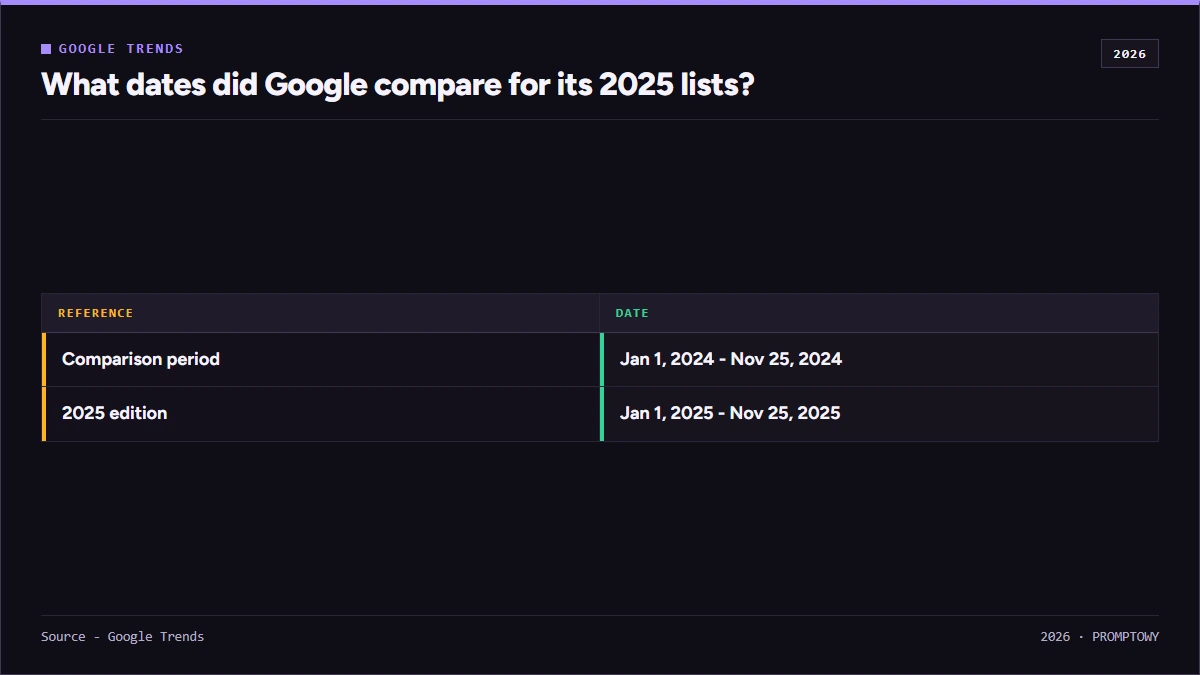
- Comparison period - Jan 1, 2024 - Nov 25, 2024. 2025 edition - Jan 1, 2025 - Nov 25, 2025.
How a smaller query can take the top spot
For the 2025 edition, Google compared searches from January 1 through November 25, 2025, with searches from the same dates in 2024. That comparison gives each query an earlier period to measure against. The resulting list highlights how much interest picked up over the comparable period. The dates describe the 2025 analysis. They leave the 2026 schedule open.
Illustrative example with made-up numbers. Say “airport ground stop meaning” goes from 500 searches in one period to 5,000 in the next, while “flight status” goes from 100,000 to 120,000. The first query rises 900 percent and the second rises 20 percent. “Flight status” still has the larger search count in both periods. This example shows how a sudden rise from a smaller starting point can outpace an everyday query. Neither figure comes from Google's rankings.
Read the geography before sharing a result
Google's U.S. page for the 2025 edition offered separate Global and United States views. It also displayed a local view for Los Angeles, California. That's a practical distinction when a screenshot gets passed around. A national result covers the United States, a global result covers the worldwide comparison, and a metro result describes a smaller area. The name of the place belongs alongside the rank.
Example of how I'd check a claim. If a post says “America searched for airport ground stops more than anything else” and shows a cropped ranking, I'd look up the original edition and check the geographic view and category. If the screenshot came from a metro page, I'd name that metro in the caption. If it came from a trending list, I'd describe a rise in interest. The caption would need separate evidence to claim the highest search count.
What a People ranking tells you
The 2025 U.S. page had separate lists called Searches, News, People, and Passings. Google's methodology describes People as trending individuals who were alive during the period and places people who died during the period on the separate Passings list. A headline about the person who led People therefore describes one category and one geography. That rank can't establish who drew the most searches across all categories, much less who was most talked about outside Google Search.
Why the film has a different number attached
For the 2025 film, Google used “breakout” for topics whose search interest increased globally by at least 5,000 percent compared with the previous year. That threshold belongs to the film methodology for 2025. A No. 1 spot on a U.S. list doesn't establish that the query crossed it.
Google also drew its Maps and Hum to Search lists from their respective products. A Maps entry reflects what people searched for in Maps, and a Hum to Search entry reflects what trended in that feature. Keeping the product name with the rank lets readers tell which kind of interest the list captures.
Sources
- Google's Year in Search
- The Year in Search Film, Social and Lists Data Methodology - Google Trends
- Google's Year in Search
Frequently asked questions
What dates did Google compare for its 2025 lists?
Comparison period - Jan 1, 2024 - Nov 25, 2024. 2025 edition - Jan 1, 2025 - Nov 25, 2025.
What does Google mean by trending?
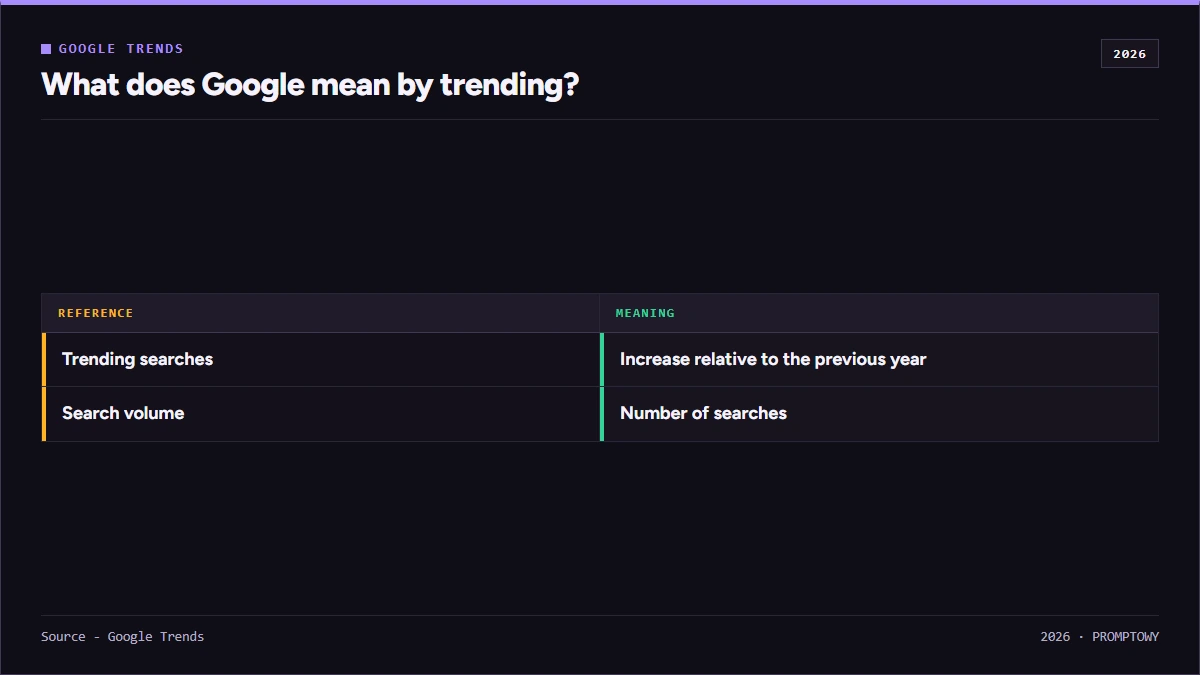
Trending searches - Increase relative to the previous year. Search volume - Number of searches.