Doomsday Clock 2027: What 85 Seconds to Midnight Means
As of Nov. 26, 2026, the Doomsday Clock stands at 85 seconds to midnight. Here’s what the number means and how to verify the next setting.
Contents 6
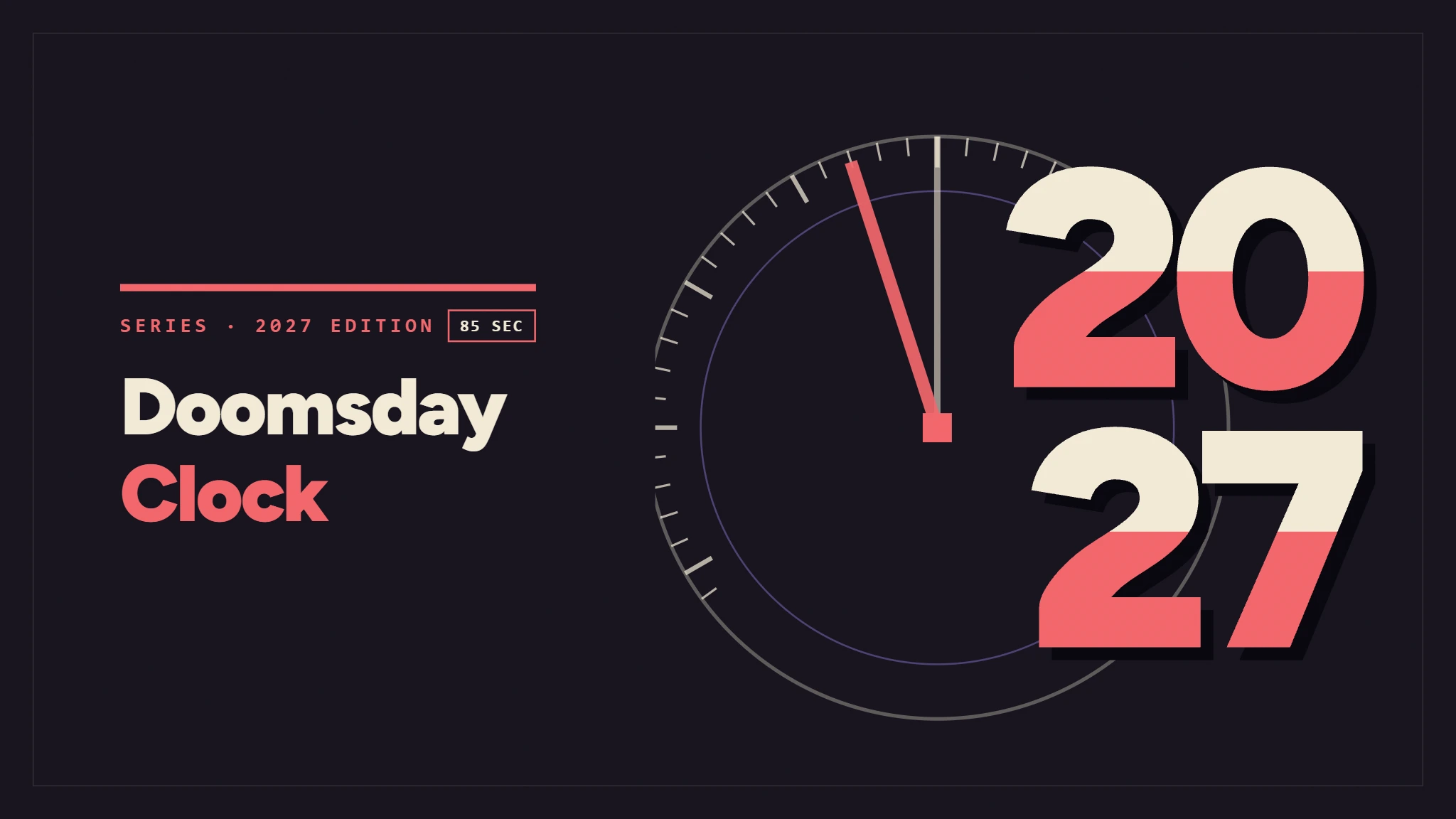
As of November 26, 2026, the Doomsday Clock stands at 85 seconds to midnight. The Bulletin of the Atomic Scientists announced that setting on January 27, 2026, moving the hand four seconds closer to midnight from its 2025 position of 89 seconds. The 85-second reading belongs to 2026. The next setting is still an open question.
- As of Nov. 26, 2026, the Doomsday Clock stands at 85 seconds to midnight. Here’s what the number means and how to verify the next setting.
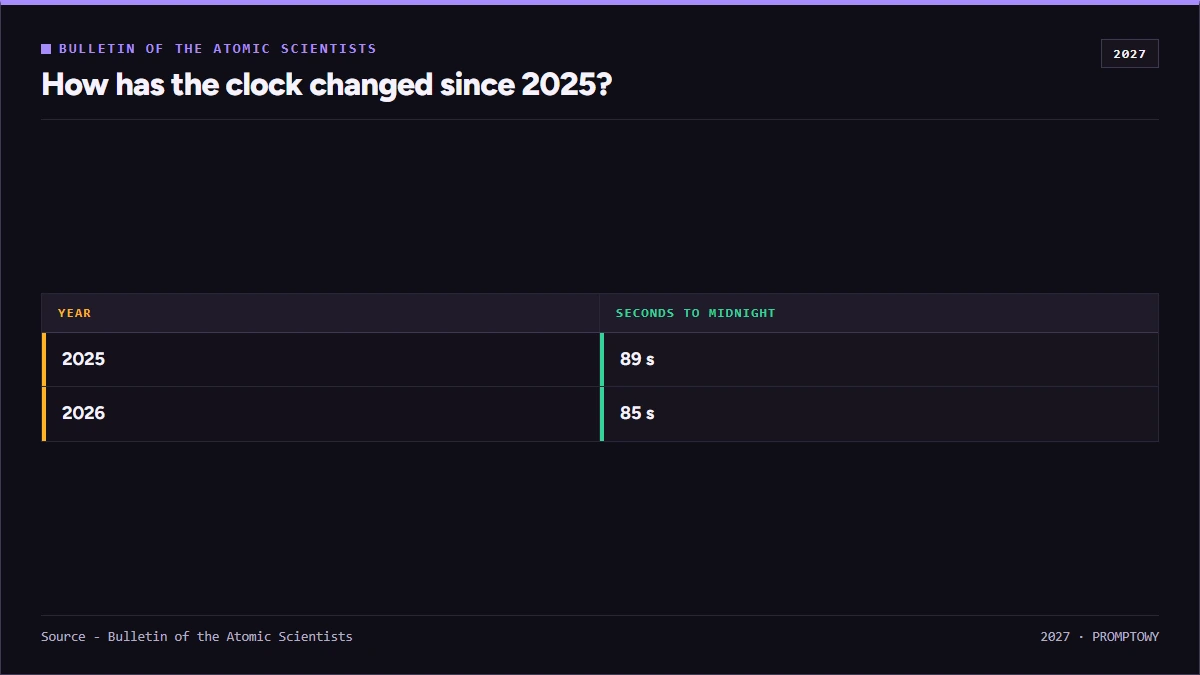
- 2025 - 89 s. 2026 - 85 s.
What kind of time does the Doomsday Clock keep?
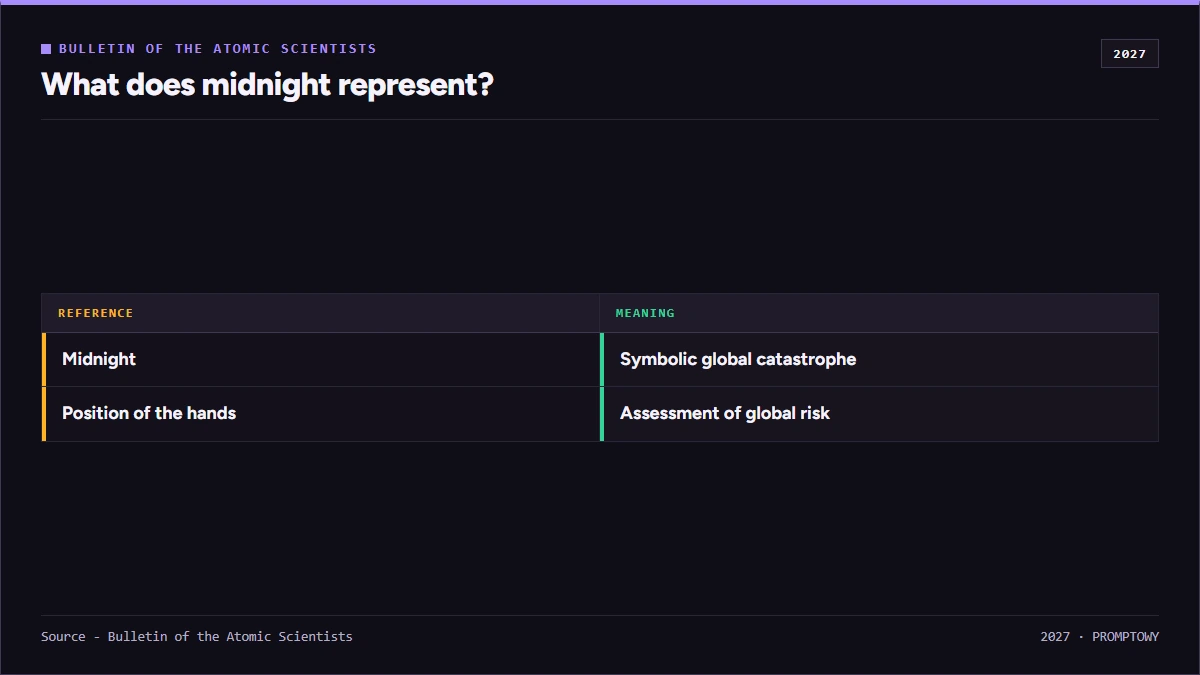
Midnight represents a global catastrophe. The distance from midnight expresses the Bulletin’s judgment about the dangers facing humanity. The Clock dates to 1947. Today, the Bulletin’s Science and Security Board sets it in consultation with its Board of Sponsors.
The move from 89 to 85 seconds tells me the board’s assessment became more urgent. The four-second difference gives me no percentage chance of catastrophe and no date to put on a calendar. The board can move the hand in either direction or leave it in place. Projecting four more seconds every year would assume a fixed rate that the Clock does not have.
What the Bulletin emphasized in Washington
In its January 27 press release issued from Washington, D.C., the Bulletin called for limits on nuclear arsenals, international guidelines for AI use, and multilateral agreements to address biological threats. The accompanying statement also addresses climate change. I read the announcement and the statement together because the number alone gives each of those topics the same small amount of space on the clock face.
One thread I followed in the statement was cooperation. Several of the actions the Bulletin describes depend on governments agreeing to act together. That helps explain why the board discusses political decisions alongside scientific and technological developments. The statement is where I look for what the board thinks could reduce a particular danger and who it thinks can act on it.
How I would check a claim about the 2027 setting
Example. Suppose a U.S. newsroom is putting together a year-end story and a proposed graphic labels 85 seconds as the 2027 setting. I would check the date on the Bulletin’s announcement and label the graphic with the January 2026 decision. I would use a separate sentence for the next announcement and leave its date and result open until the Bulletin confirms them.
The same check works when an old image circulates with a new caption. Start with the organization named on the graphic, find its dated statement, and compare the year and the setting. A recent timestamp on a repost tells you when someone shared it. The date on the original announcement tells you when the board made the decision public.
Should I worry about 85 seconds?
I take it as a prompt to pay attention to the risks the Bulletin identifies. The most useful question I can ask of the statement is which developments shaped the board’s judgment and what could change them. A single number gets the discussion started. The reasons behind it give me something concrete to follow when the Bulletin issues its next assessment.
Sources
Frequently asked questions
How has the clock changed since 2025?
2025 - 89 s. 2026 - 85 s.
What does midnight represent?
Midnight - Symbolic global catastrophe. Position of the hands - Assessment of global risk.