What Does a Proof of the Riemann Hypothesis Change? From Prime Numbers to the Key in Your Browser
The Lean and Mathlib communities confirmed a formal proof of the Riemann hypothesis. I check what it means for primes, RSA keys and the Clay prize.
In Levent Alpöge's archive you can point to the place where the proof ends. It is harder to point to a page that, once closed, leaves a mathematician able to reconstruct the main idea. On November 20, Alpöge announced that, with the help of Claude, he had found a solution. The next day the Lean and Mathlib communities confirmed the correctness of the formal proof of the classical hypothesis. I read their statement and looked through the verification documentation from MIT. The most interesting consequence can be shown on an ordinary sheet of squared paper. Lean and Mathlib statement · MIT checks
- On November 21, 2026, the Lean and Mathlib communities confirmed the correctness of the formal proof of the classical Riemann hypothesis announced by Levent Alpöge.
- The hypothesis bounds the error in counting primes. It does not provide a method for factoring RSA keys.
- The Clay prize is governed by a separate procedure: publication, at least two years, and general acceptance by mathematicians.
Two ticks below a hundred
I write out the primes up to one hundred. The last two are 89 and 97. There are 25 of them in total. Up to a thousand there are 168. You can keep extending such lists ever further, but the gaps that follow stay capricious. Between 89 and 97 there are eight units, between 101 and 103 only two. The question that leads to Riemann is how far the total count of primes up to a given limit can stray from a good forecast.
Li(x): the smooth forecast, the logarithmic integral
Mathematicians have such a forecast. Imagine a counter to which every successive number contributes a small fraction. As the limit moves up, that contribution shrinks, because the higher you go, the less often a prime turns up. The logarithmic integral describes a smooth curve that can be compared with the steps of the real counter. The prime number theorem itself says that on a large scale the ratio between the count and the approximation tends to one. The Riemann hypothesis allows the deviation to be bounded much more tightly. The mathematical statement of one consequence is π(x) = Li(x) + O(√x log x) for large x. The letter O hides a constant. Substituting 100 into the expression under the root does not give the exact error for our list. Description of the problem and the official CMI statement
This makes a difference in a mathematician's work. If in an older paper some estimate was derived on the condition that the classical hypothesis is true, then to apply it now it is enough to settle the exact wording of the assumption and the scope of the proof. There are also papers that require hypotheses about other functions. Alpöge described an extension for Dirichlet L-functions. Before carrying a conclusion over to other families, every assumption has to be checked. Alpöge's note · Five theorems being checked
Why one half matters more than a trillion
Riemann looked at the question of primes through the zeta function. Into such a function you can plug a complex number, that is, a point defined by two coordinates. On the graph I am interested in the points where the value of the function vanishes. The first of the nontrivial points above the real axis lies at a height of about 14.134725. The second lies at a height of about 21.022040. In both cases the horizontal coordinate is 1/2.
- n = 11/2 + 14.134725 i
- n = 21/2 + 21.022040 i
- n = 31/2 + 25.010858 i
- n = 41/2 + 30.424876 i
- n = 51/2 + 32.935062 i
The formula linking the zeros to the counting of primes lets us grasp what is at stake. Individual zeros contribute oscillations to the approximation. The real part of a zero affects the scale of that contribution, and the imaginary part its oscillation. When all nontrivial zeros lie exactly on the line with real part 1/2, we gain control over how the error grows. That is why the position of a single hypothetical point far beyond the reach of computers can matter more than adding a trillion more agreeing examples. Odlyzko's zero tables · NIST DLMF, zeros of the zeta function
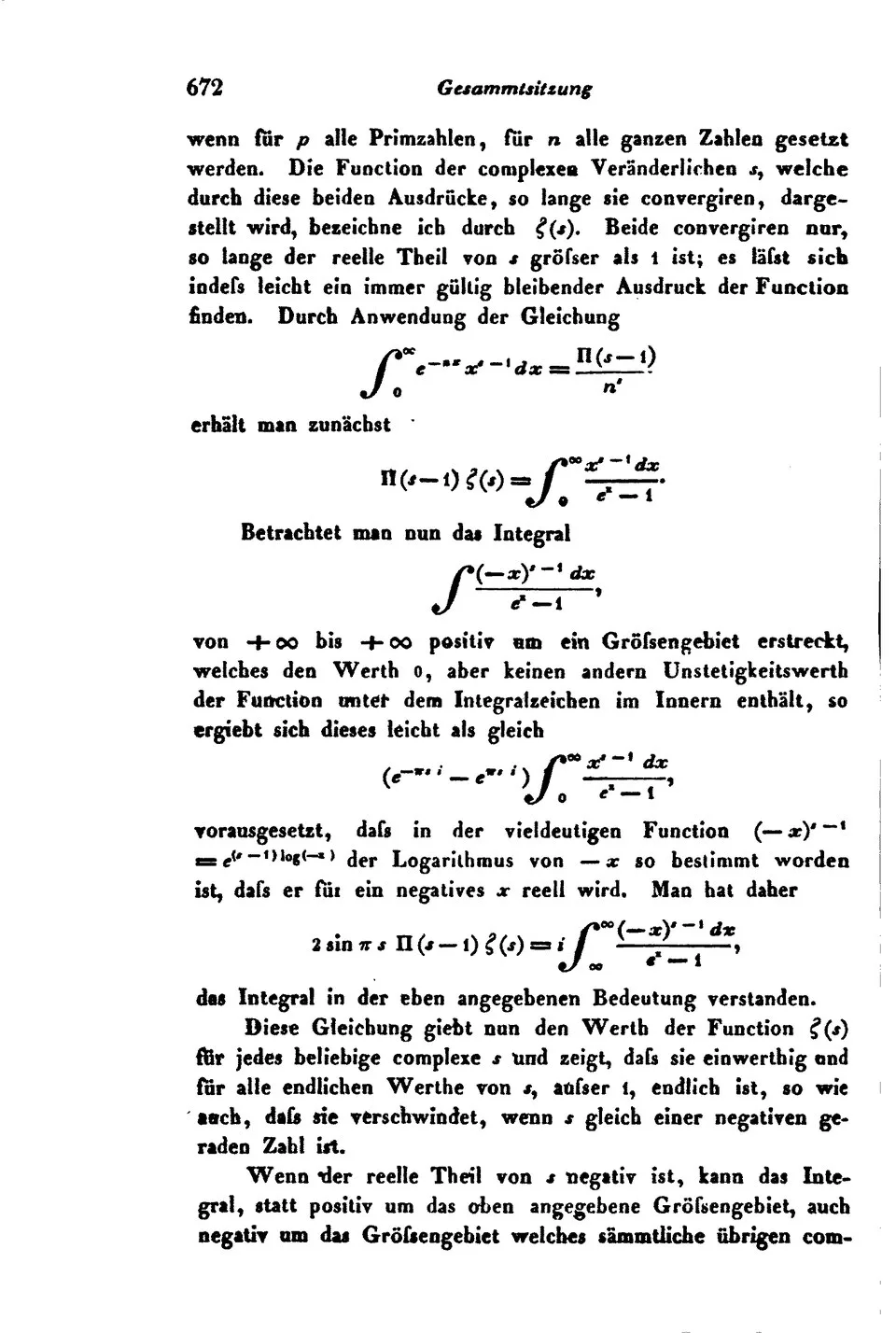
The computational result can be stated in two ways. Clay writes about the first ten trillion zeros checked. Dave Platt and Tim Trudgian proved, with rigorous error control, agreement up to a height of three trillion. That second number is a coordinate on the vertical axis. From these two values you must not conclude that the first team checked more than three times as many points. Clay · Platt and Trudgian's paper
The first value counts points, the second is a coordinate. They cannot be compared directly.
The browser padlock after the proof announcement
I take 323. Am I to find out how many primes lie below that limit, or to factor the number itself? In the second task the answer is 17 times 19. The forecast of prime density around 323 does not directly suggest either of those divisors. For the numbers used in cryptography, the distance between the two tasks matters especially.
In RSA, the public key contains, among other things, a large modulus, usually the product of two suitably chosen primes. Knowing the factors makes it possible to recover the information needed for private operations. For Alpöge's announcement to pose a practical threat to such keys, someone would have to show an effective method for moduli of the size in use and work out its cost. The joint Lean and Mathlib statement assessed the proof of the theorem about zeros. It did not present an algorithm for factoring RSA moduli. Nothing in this publication calls for replacing a key or a password. RSA specification, RFC 8017, section 3 · Verified scope of the theorem
What you can do with seventeen million lines
I start with a short check file. It contains the definition of the hypothesis from the Mathlib library, whose meaning experts can verify without loading the author's enormous archive. Two tools compared that definition with the goal the proof leads to. Then several independent programs accepted the exported record of the steps. The exporter makes it possible to examine a fixed record of the reasoning without running the commands contained in the original project. That is a far stronger result than a message saying the compilation has finished. Community statement
182/-- A formal statement of the **Riemann hypothesis** – constructing a term of this type is worth a
183million dollars. -/
184@[wikidata Q205966]
185def RiemannHypothesis : Prop :=
186 ∀ (s : ℂ) (_ : riemannZeta s = 0) (_ : ¬∃ n : ℕ, s = -2 * (n + 1)) (_ : s ≠ 1), s.re = 1 / 2Andrew Sutherland of MIT showed yet another check. Known equivalent formulations of the problem can be attached to the formalization. The Robin and Lagarias criteria involve the sum of divisors of a natural number. A mathematician familiar with those inequalities can recognize the goal without wading through the definitions of the zeta function. A formal record that withstands such comparisons becomes a tool for further work. The reader still wants to know, however, why anyone came up with this idea at all. Log and experiment files
“We hereby certify that both the statement and the proof of the Riemann Hypothesis are correct.”
Alpöge himself mentioned an attempt to expand the reasoning into a text of more than 250 thousand pages. That is his description of the length of the working explanation. The note made available has four pages. When Terence Tao pointed those interested to the discussion around the files, he also meant extracting the strategy of the proof. For a teacher and for a researcher working on a neighboring problem this is a practical question: which part of the method is worth taking along? Author's note · Terence Tao's post
These are different measures of the same material. They should not be added up.
Who signs the result and when the prize appears
In the note Alpöge speaks for himself and credits Claude with a significant share in the discovery. The repository and reports let you check the result, but they do not reproduce every decision made while working with the model. A reader can fairly attribute the announcement to the person, describe the system's contribution according to that person's account, and separately name the people who undertook the verification. Authorship of the future paper will be decided by its actual list of authors.
“Claude flew, and danced, and sparkled near that finish line.”
The Clay Mathematics Institute applies its own procedure. The solution must appear in a qualifying venue of publication. At least two years must pass since publication. The institute also requires general acceptance by the international mathematical community. In particular, there is no basis for adding two years to the date the files were posted online and announcing a payout day for the million dollars. In the laureate field, no name can yet be entered. Clay rules
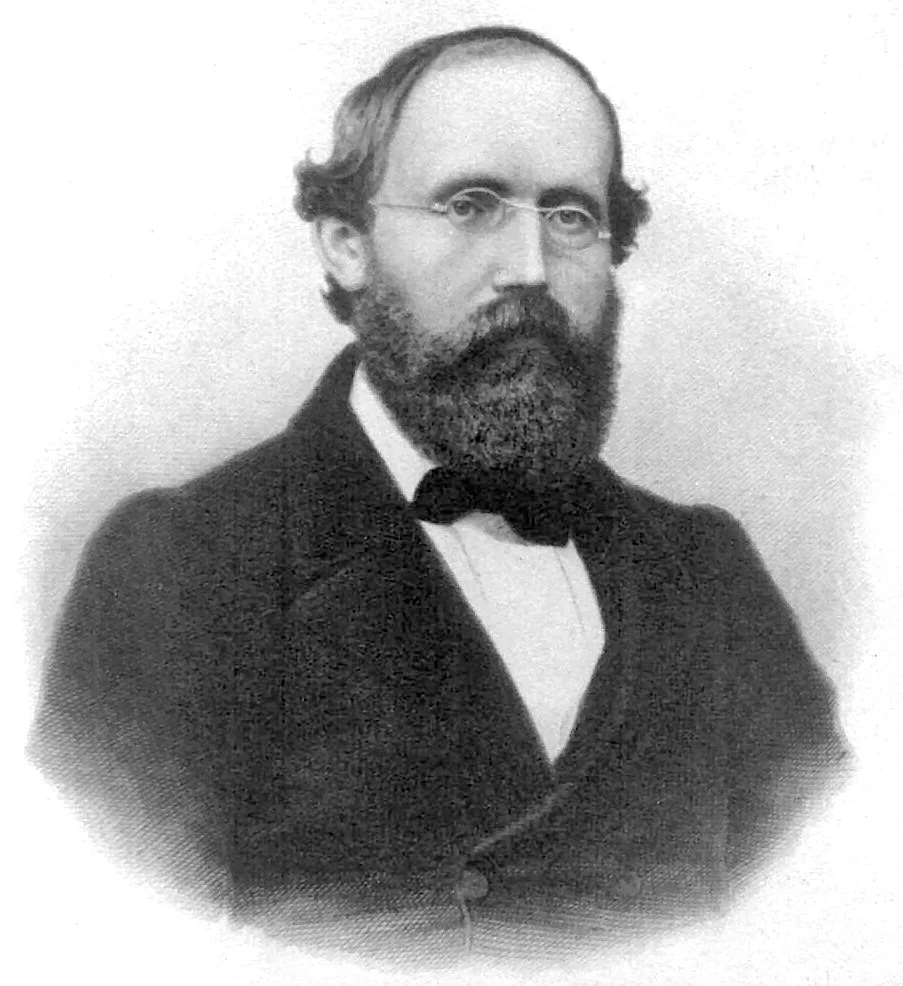
- 1859Riemann publishes a paper on the number of primes below a given size
- 2000The Clay Mathematics Institute announces the list of Millennium Problems
- 2020Platt and Trudgian release a computational proof up to a height of 3 × 10¹²
- Nov 20, 2026Alpöge announces the result, publishes a note and links to 14 parts of the archive
- Nov 21, 2026
14:55 CETThe Lean and Mathlib communities attest to the correctness of the formal proof of the classical hypothesis
Three conditions of the Clay prize · As of 21.11.2026: the institute has not announced a laureate. claymath.org
Readers' questions
Is this the end of encryption?
No. An estimate of how the primes are distributed does not reveal the factors of any particular RSA key. The term “encryption” also covers many systems built on other foundations.
Can I now find the next prime without checking candidates?
The hypothesis bounds the error in the count. It does not give a ready-made list of the next primes.
Has the formal proof been checked independently?
Yes. The statement of November 21 describes a check of the content of the theorem and a verification of the proof by separate programs. The status of the prize and the work on an explanation for humans are separate matters.
Who gets the million dollars?
The decision is made by Clay according to its own rules. As of November 21, no laureate has been announced.
Is the AI an author?
Alpöge stated that he discovered the proof in collaboration with Claude. The verification statement does not settle the rules of authorship or the division of any prize.
 YouTube
- Page of Riemann's 1859 paper, Monatsberichte der Berliner Akademie: public domain, Wikimedia Commons.
- Bernhard Riemann, 1863. Author unknown, public domain, Wikimedia Commons.
- Charts and lettering: promptowy.com. Zero data: Andrew Odlyzko's tables. Odlyzko
- Video still: YouTube.